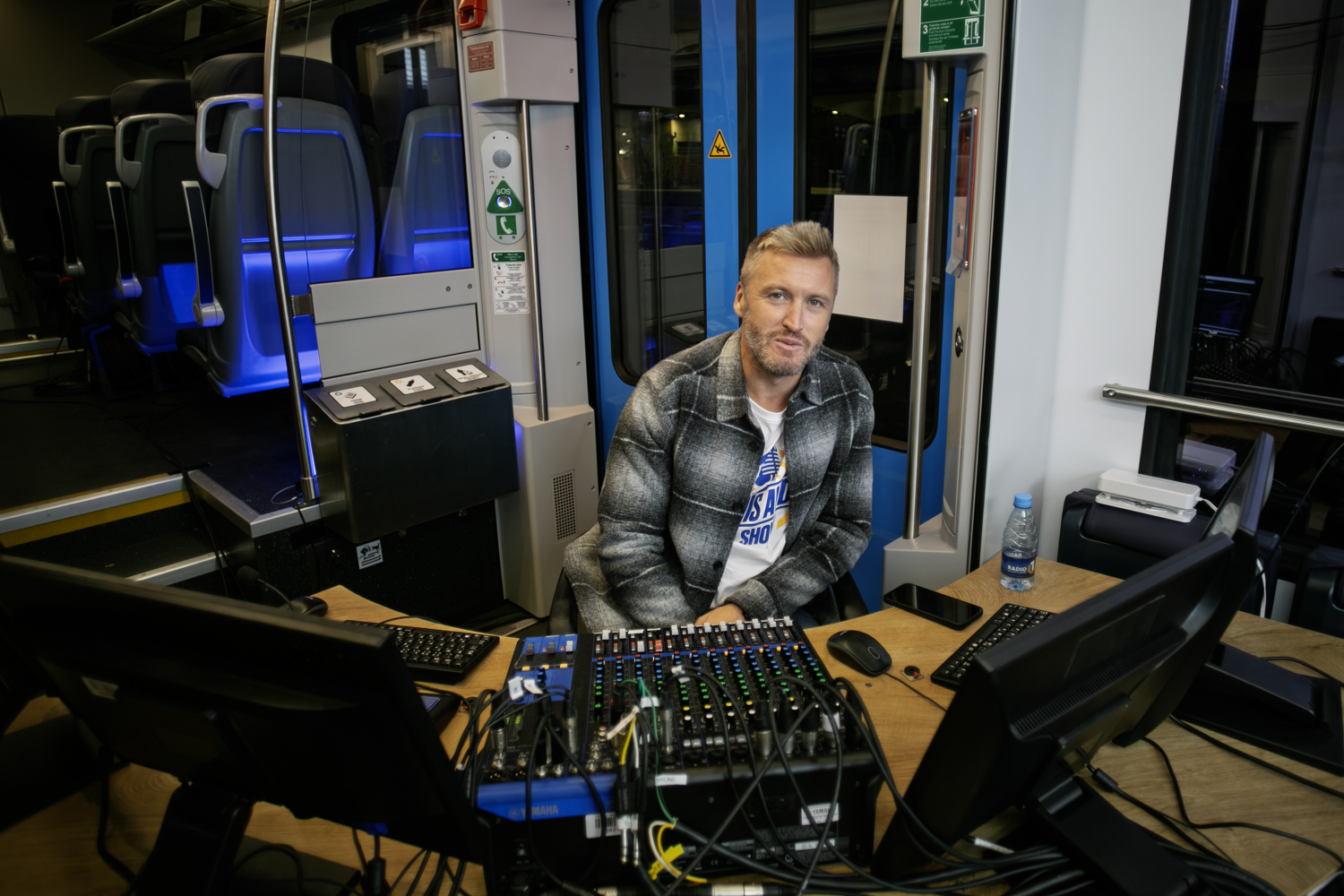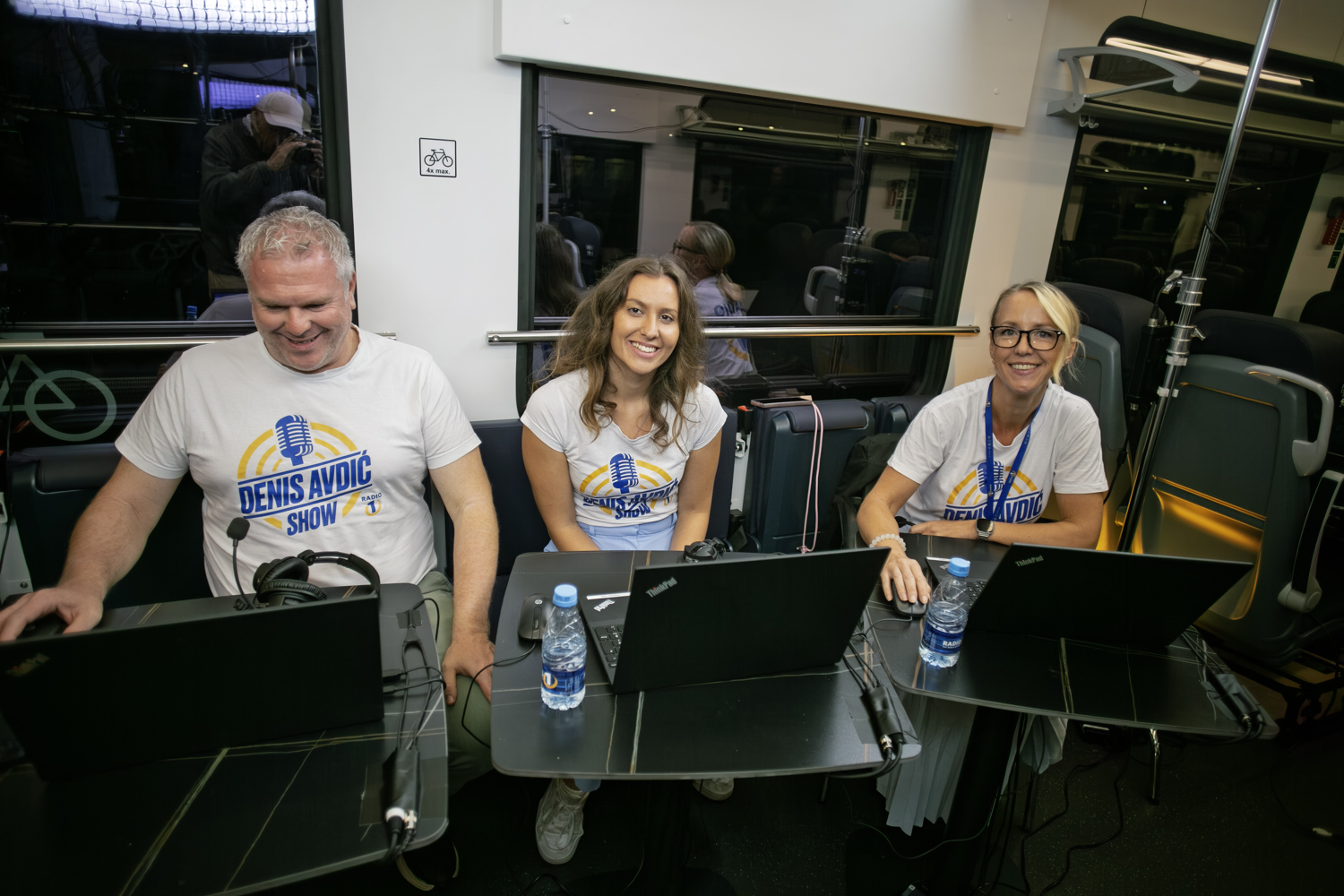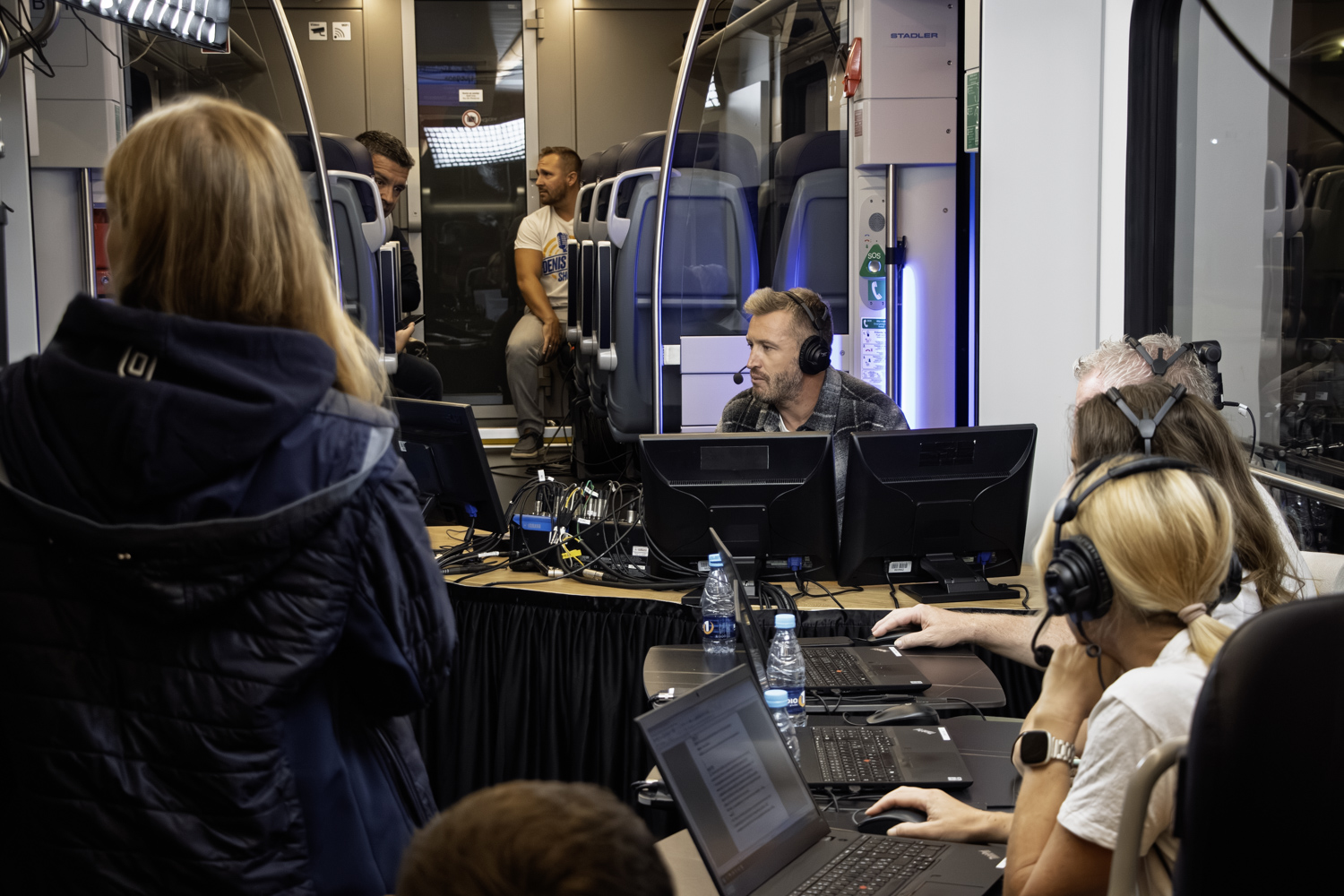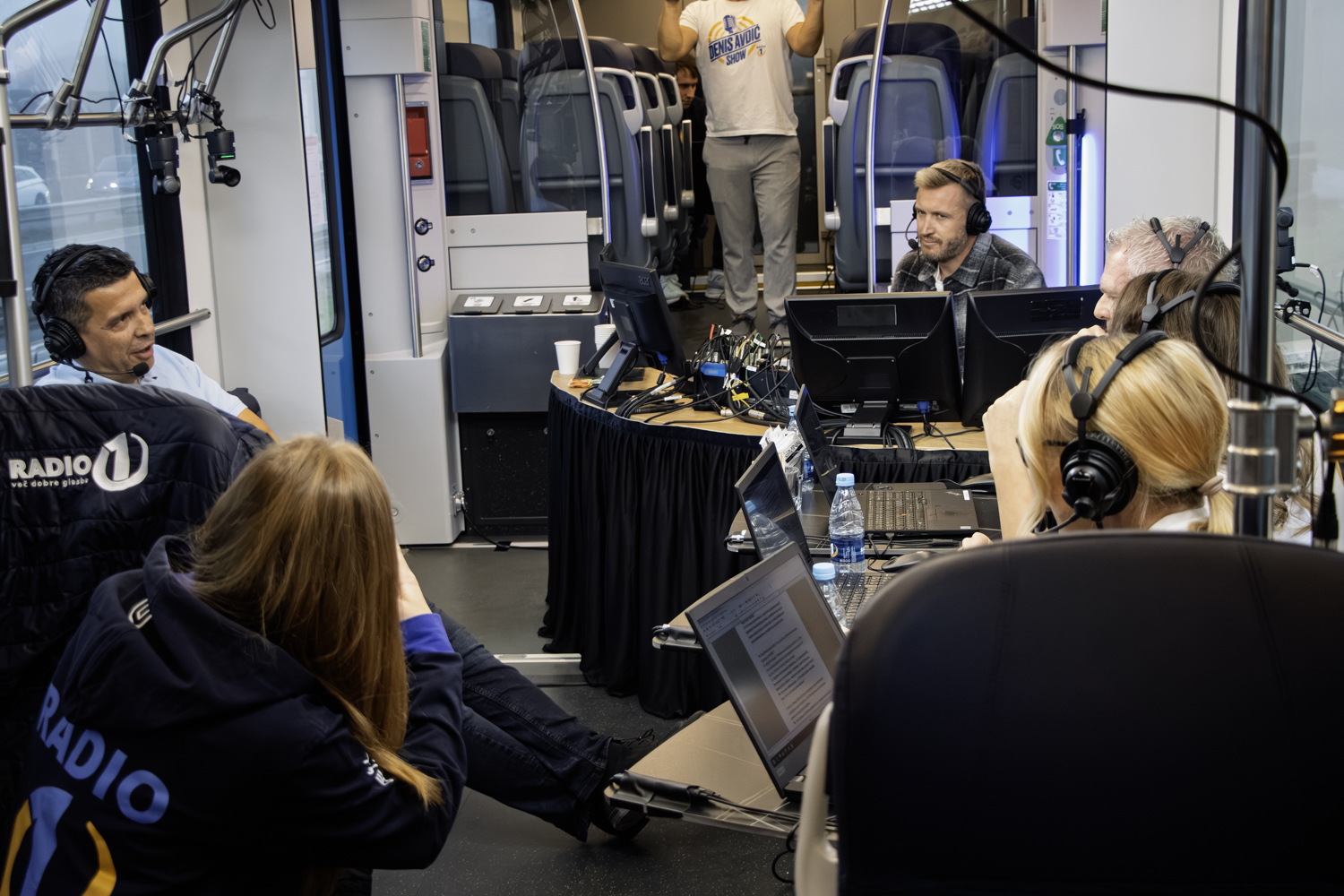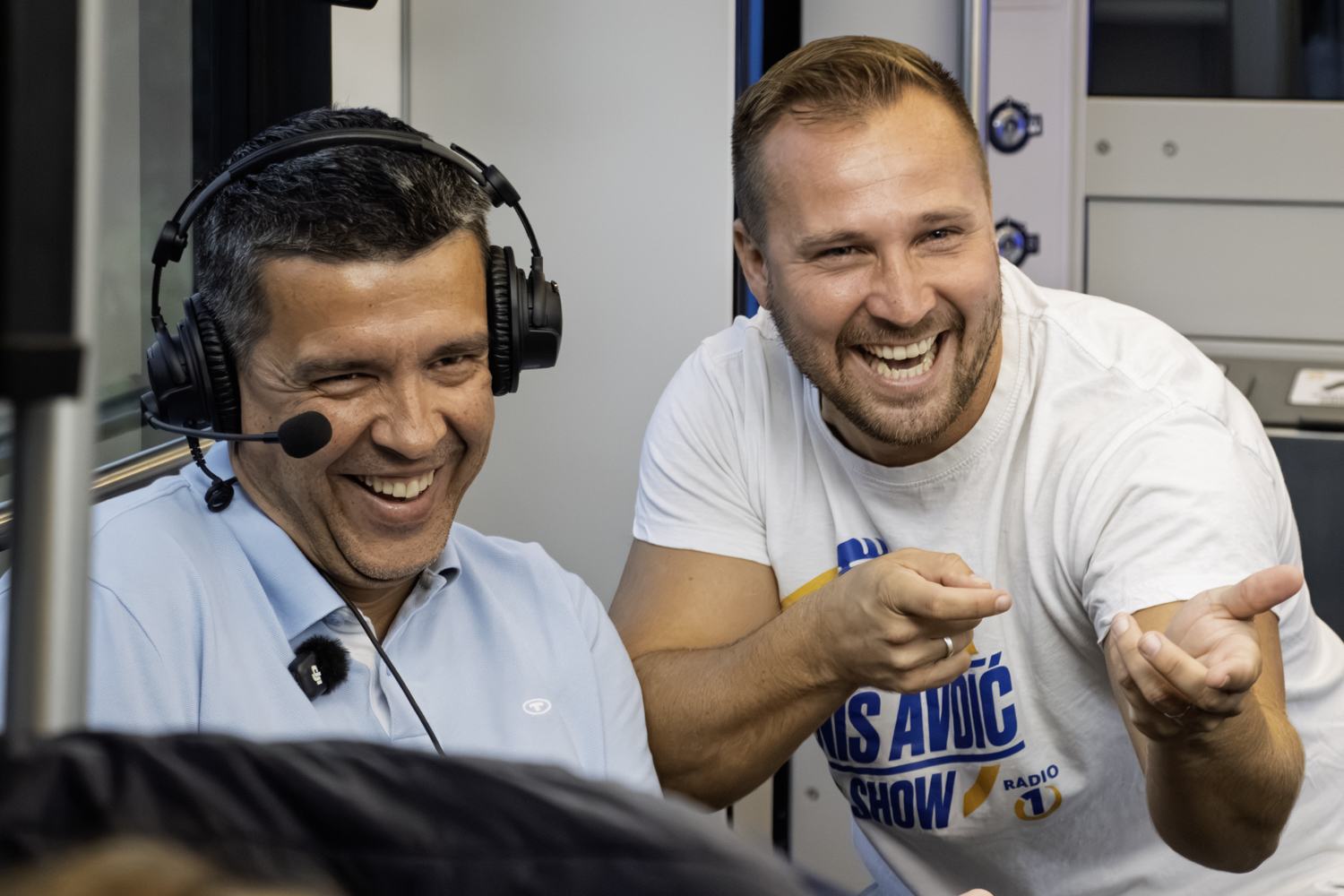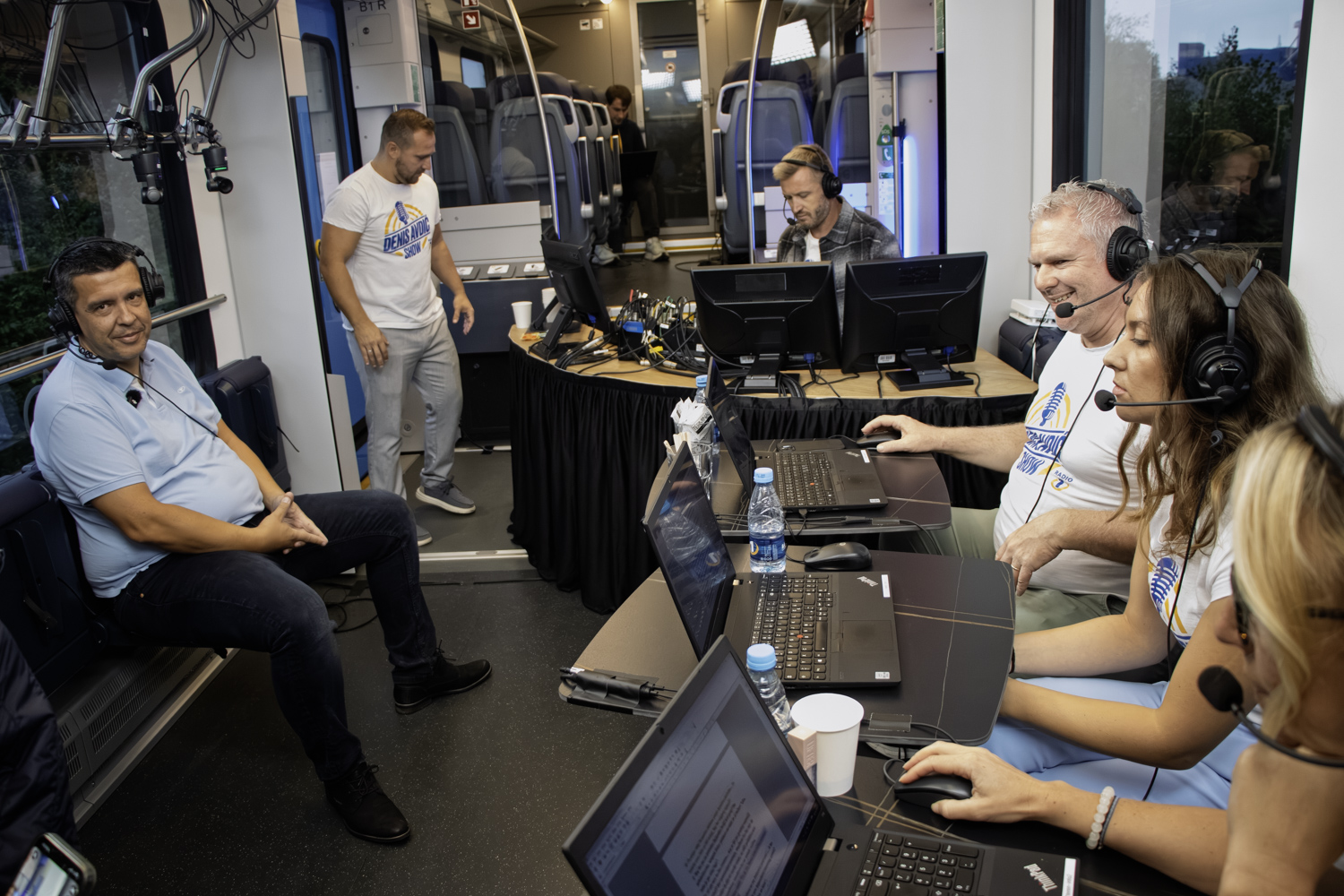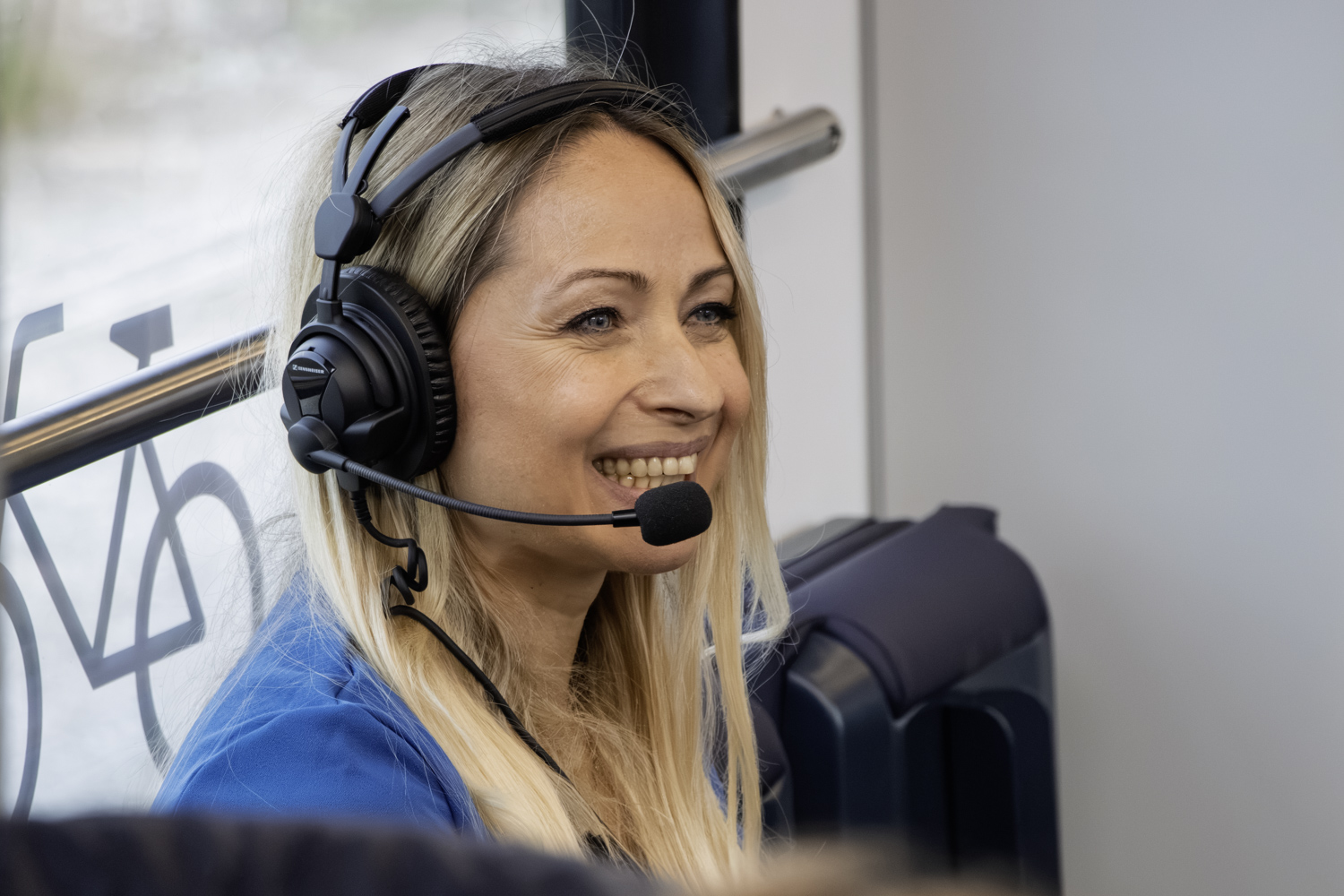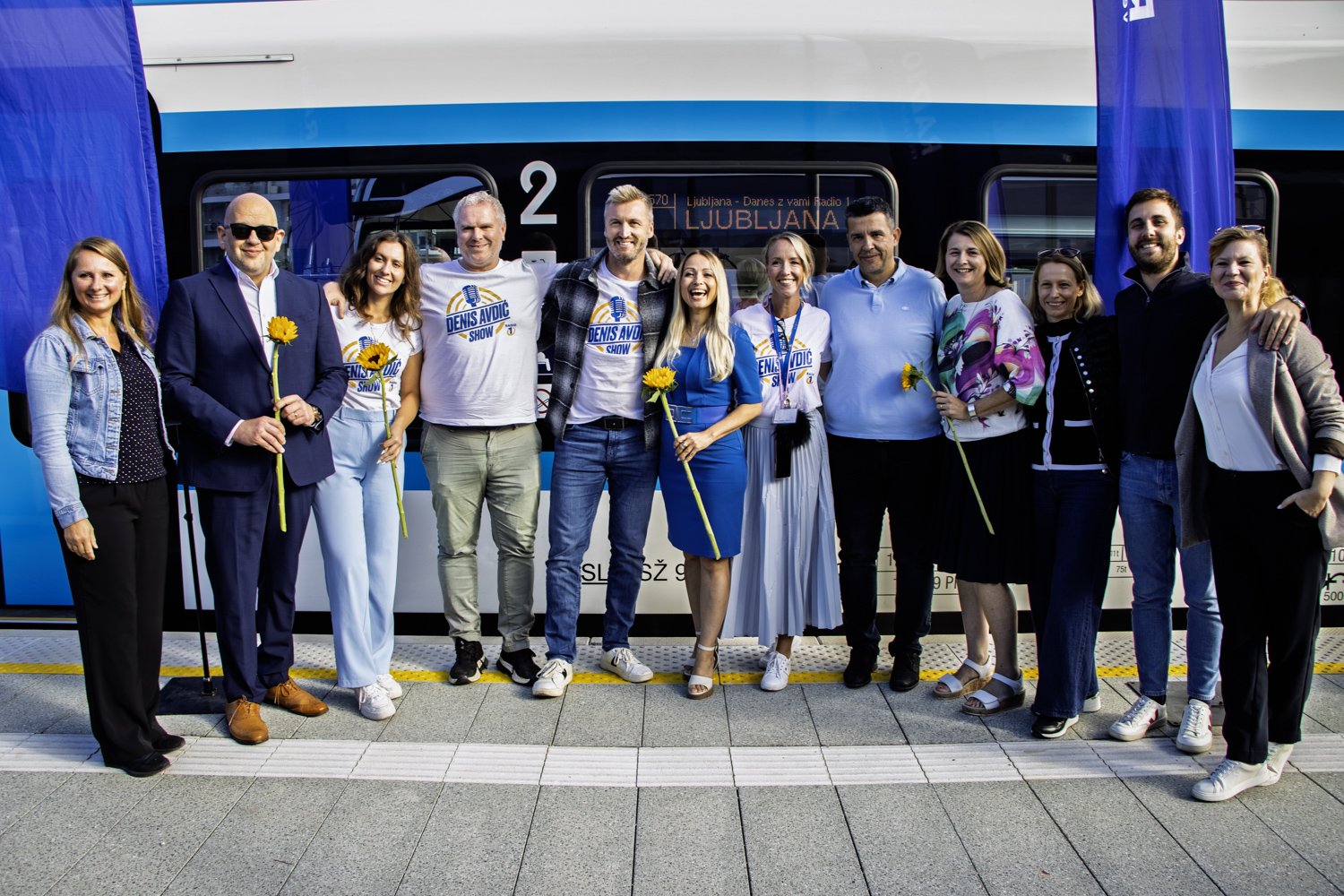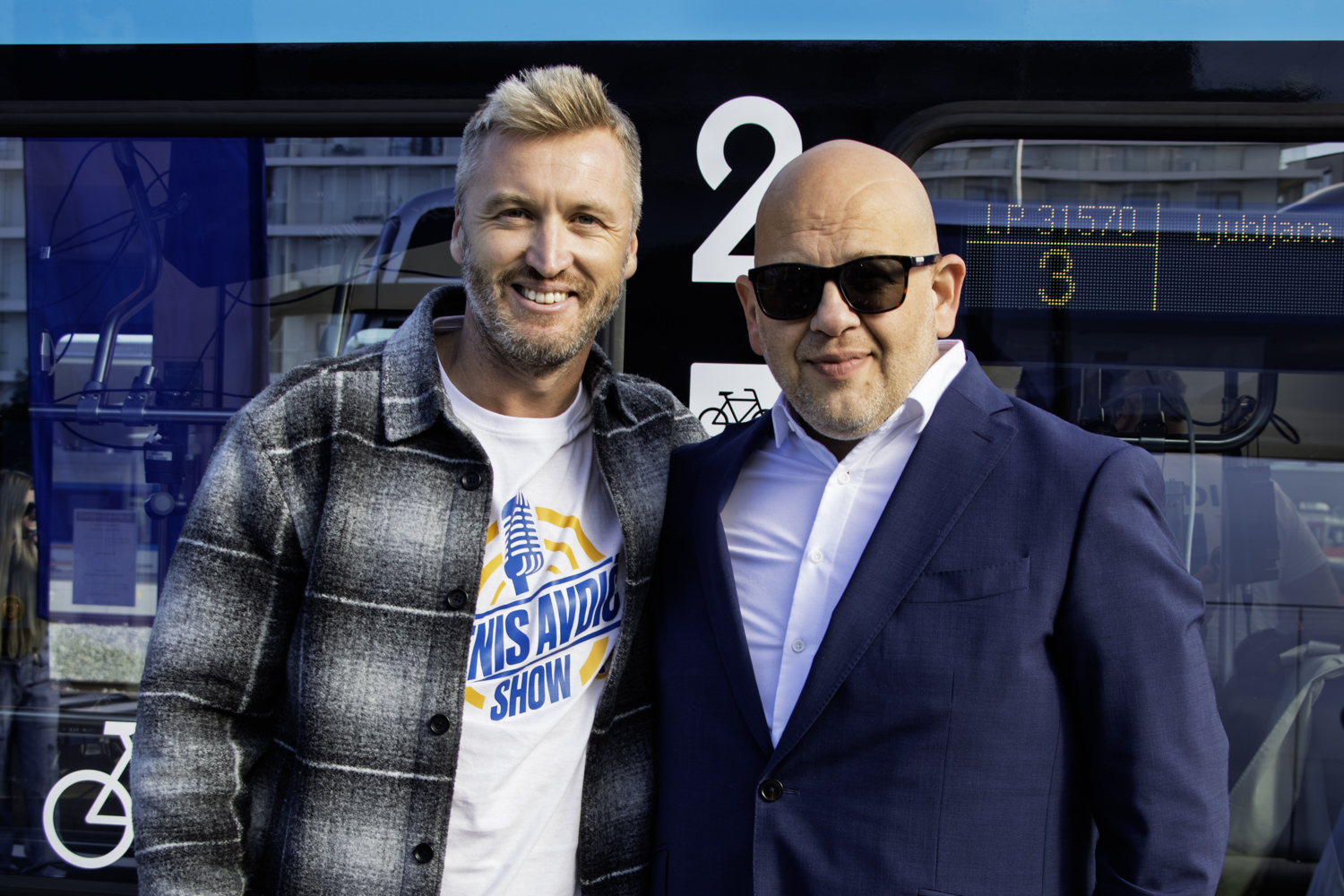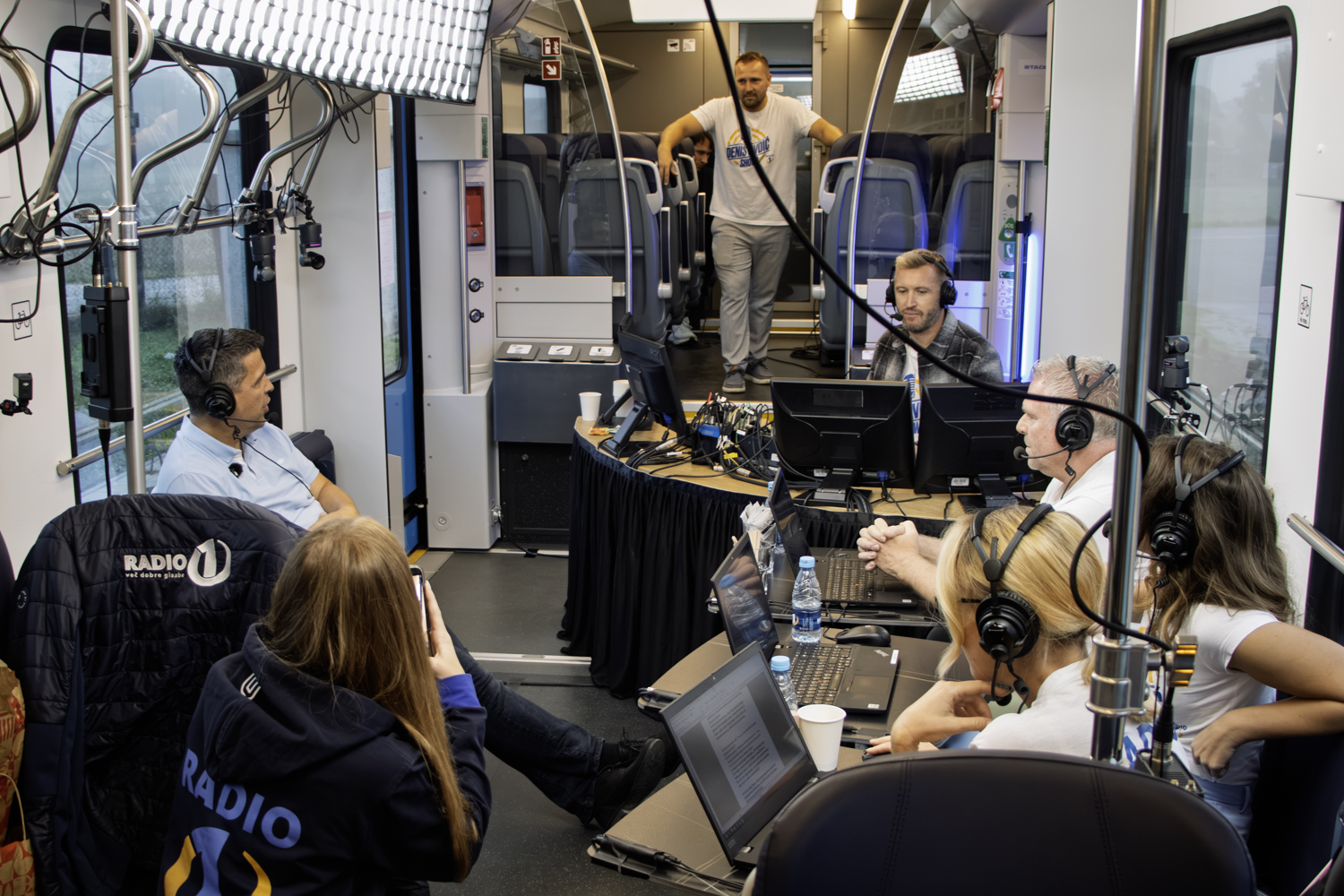
This year, Slovenian Railways once again marked the start of European Mobility Week in a slightly different way – by bringing a radio studio onto the railway tracks. For the second year in a row, the team of Radio 1’s morning show, Denis Avdić Show, greeted listeners live from a train from as early as 5 a.m., making the morning journey a little more enjoyable for passengers of all generations, wherever they were headed.
“I am pleased to see that today people of all generations are travelling by train – employees commuting to work, pupils travelling to school, and older passengers going about their daily activities,” said Miha Butara, Director of SŽ – Passenger Transport, during a conversation with Denis Avdić, Miha Deželak, Lara Tošić and Ota Roš.
The fact that train travel is becoming an increasingly popular choice is also reflected in last year’s record results, when 20.9 million passengers travelled with us – the highest number since Slovenia gained independence. Trends for this year are also encouraging and indicate that this milestone could be surpassed, despite the numerous line closures associated with extensive infrastructure projects across the railway network.
“Rail transport is safe and sustainable, which is why choosing the train is one of the simplest ways to make our everyday journeys more environmentally friendly,” Butara added.
Sustainability Goals in Full Bloom During European Mobility Week
On average, travelling by passenger train has a carbon footprint around ten times lower than travelling by car. A passenger commuting every working day between Ljubljana and Kranj by electric train instead of by car can save more than two tonnes of CO₂ emissions per year. By comparison, approximately 80 trees absorb a similar amount of CO₂ in one year.
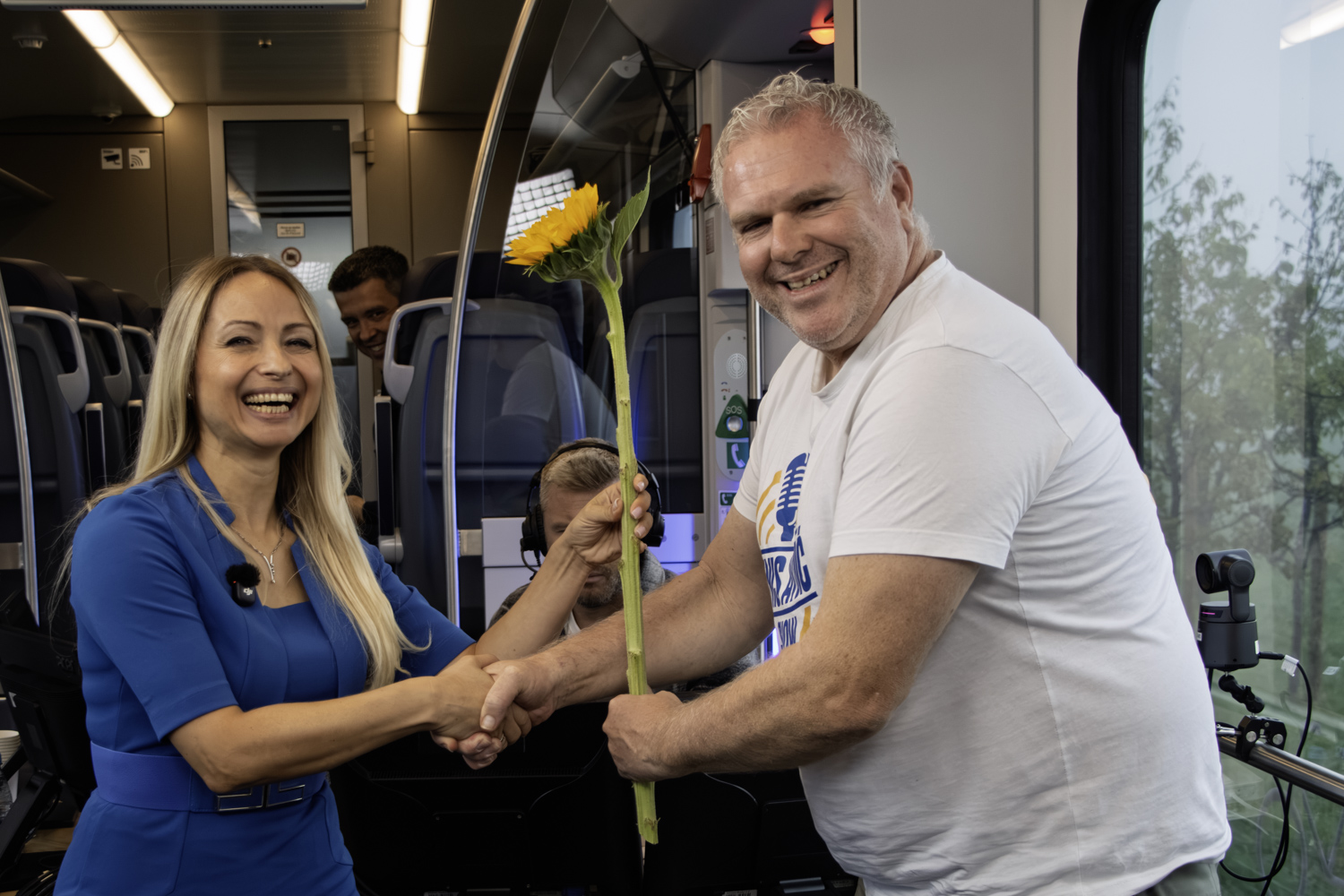
The sunflowers blooming alongside railway tracks and stations across Slovenia during European Mobility Week are also a reminder that our commitment to the environment is reflected in concrete action. During the journey to Kamnik, Tanja Rotovnik, MSc, Director of the Marketing and Communications Sector, highlighted:
“European Mobility Week is not only about how we travel, but also about how we work together to create an environment in which public transport is a simple and attractive choice for people.
At Slovenian Railways, we are therefore investing in more modern and energy-efficient trains, using electricity from renewable sources, and working with local communities and other partners who help shape mobility throughout the passenger journey. The Sowing a Sunny Tomorrow project is a wonderful example of what can grow when dedication, cooperation and a shared desire for positive change come together.
I am grateful to the many municipalities and individuals who embraced the project as their own and demonstrated that major change can grow from many small actions.”
Railways are not only a more environmentally friendly alternative to travelling by car, but also the backbone of modern public passenger transport, said Goran Prodanovič, Head of Ljubljana Railway Station, which is currently undergoing a comprehensive upgrade.
“Despite the works, we continue to ensure uninterrupted passenger and freight traffic, as closing the station is simply not an option. Even during extensive construction works, approximately 290 passenger trains and 150 freight trains passed through Ljubljana Railway Station every day,” he added.
Connecting Different Forms of Sustainable Mobility
At Slovenian Railways, we see sustainable mobility not simply as choosing one particular mode of transport, but also as effectively connecting different forms of mobility – from trains and buses to bicycles and electric scooters. This is the kind of integration we actively enable and encourage.
Last year, more than 60,000 bicycles were transported on our trains, while an increasing number of passengers are also combining rail travel with electric scooters.
We are further strengthening the range and connectivity of public passenger transport together with Nomago, the newest member of the Slovenian Railways Group. An important step in this direction was the opening of Ljubljana Bus Station at its new temporary location, bringing rail and bus services even closer together and making transfers between the two forms of public transport easier.