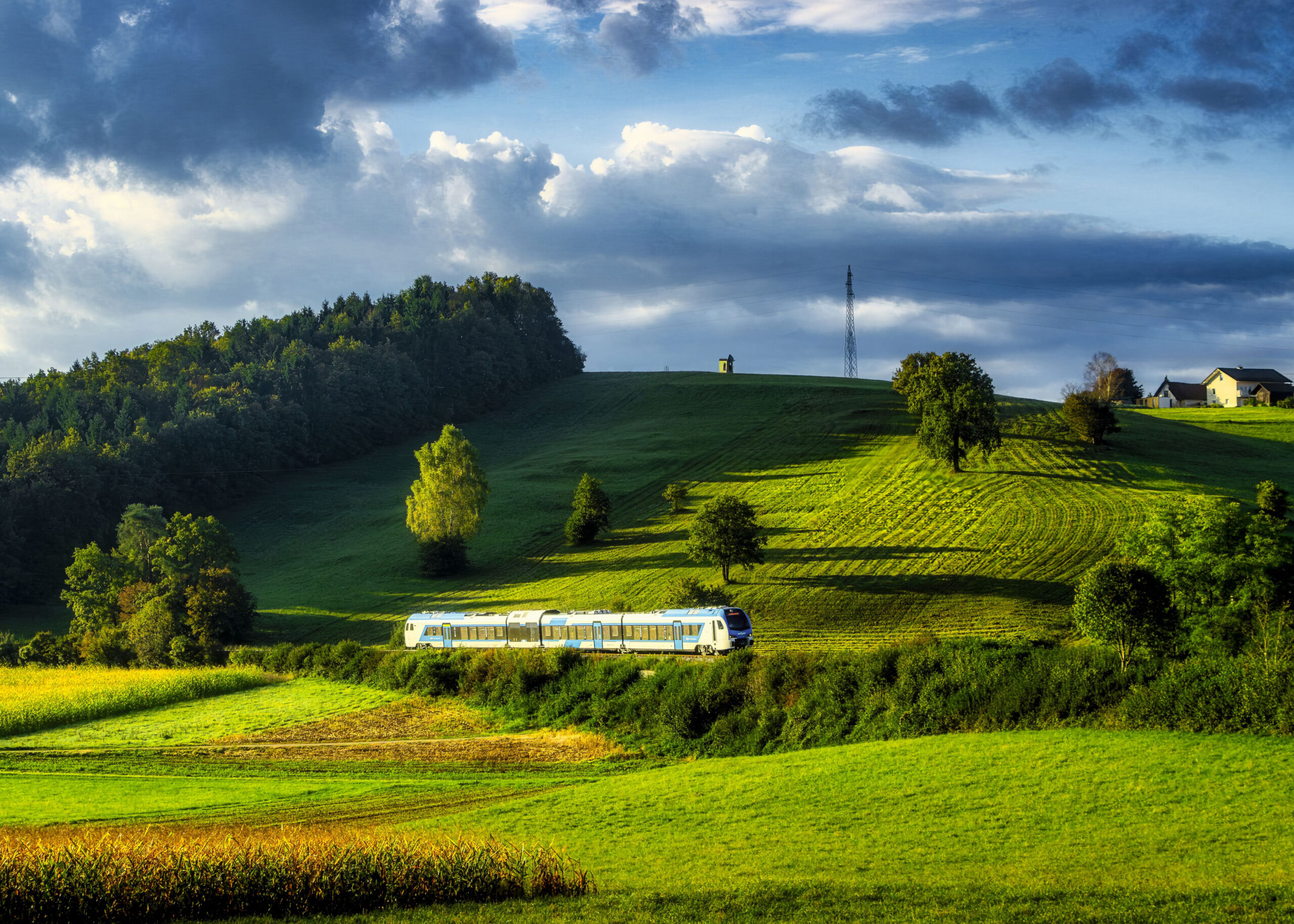
Last year, 20.9 million passengers travelled with Slovenian Railways – the highest number in the history of independent Slovenia and 25 percent more than the year before. This record confirms that rail is playing an increasingly important role in sustainable mobility across Slovenia. At the same time, we were pleased to welcome the final – twentieth – Stadler trainset from the SŽ 610-100 series to Slovenia.
20.9 million passengers show that people continue to place their trust in rail, even during a period of extensive infrastructure investment. This growth is not accidental – it reflects fleet modernisation, expanded international connections, digital solutions and close cooperation with local communities. Our goal remains clear: reliable, accessible and sustainable public passenger transport,” said Miha Butara, Director of SŽ–Passenger Transport.
We are particularly proud of this result as it was achieved despite numerous line closures, service adjustments and large-scale infrastructure works. Even with these challenges, we managed to keep the majority of services running and maintain a stable offer in both domestic and international traffic.
Improving the passenger experience
In the past year, SŽ–Passenger Transport introduced the free “Moj vlak” (My Train) service, which provides SMS notifications about disruptions and changes in domestic traffic. Passengers can select their route and receive timely updates. We will soon further enhance the service to make travelling with us even more convenient.
The final FLIRT trainset arrives
The twentieth and final Stadler FLIRT trainset from the SŽ 610-100 series has now arrived in Slovenia, completing the delivery of all new diesel multiple units for regional services. The full fleet of 20 trainsets – 19 of which were delivered last year – represents an important step in modernising our rolling stock and improving travel quality.
The new trains offer enhanced accessibility for passengers with reduced mobility, modern passenger information systems, more space for passengers and bicycles, and the possibility of future conversion to bimodal operation (diesel and electric), allowing for more flexible and sustainable use across different lines.
We are continuing to invest in our fleet. Last year, we signed a contract for 20 new passenger coaches for international services and four multi-system locomotives, further strengthening cross-border capacity and service quality.
Strengthening international connections
New trains were also introduced into international services last year. A direct Zagreb – Ljubljana – Pula connection now links capitals and coastal cities without transfers. Additional services between Ljubljana and Zagreb were added, and a regular-interval timetable was introduced between Maribor and Graz. New trains also operate to Zagreb and Villach.
These improvements not only enhance mobility for passengers but also strengthen regional and international connectivity and support sustainable travel between Slovenia, Croatia and Austria.
Looking ahead: high-speed rail in Europe
Slovenian Railways, together with European railway operators and cities, signed a declaration supporting the development of a connected European high-speed rail network, in line with the European Commission’s plans.
“We see this as an important opportunity for Slovenia to become more closely integrated into Europe’s future high-speed rail network and to strengthen its role in sustainable mobility,” said Miha Butara at the signing.
The declaration calls for long-term investment, simpler ticketing solutions, greater interoperability and a stronger role for rail as a sustainable alternative to short-haul air travel. The plan envisions significantly shorter travel times – for example, a journey between Ljubljana and Vienna could take just four and a half hours by 2040. Europe plans to develop 49,400 kilometres of high-speed rail lines.


