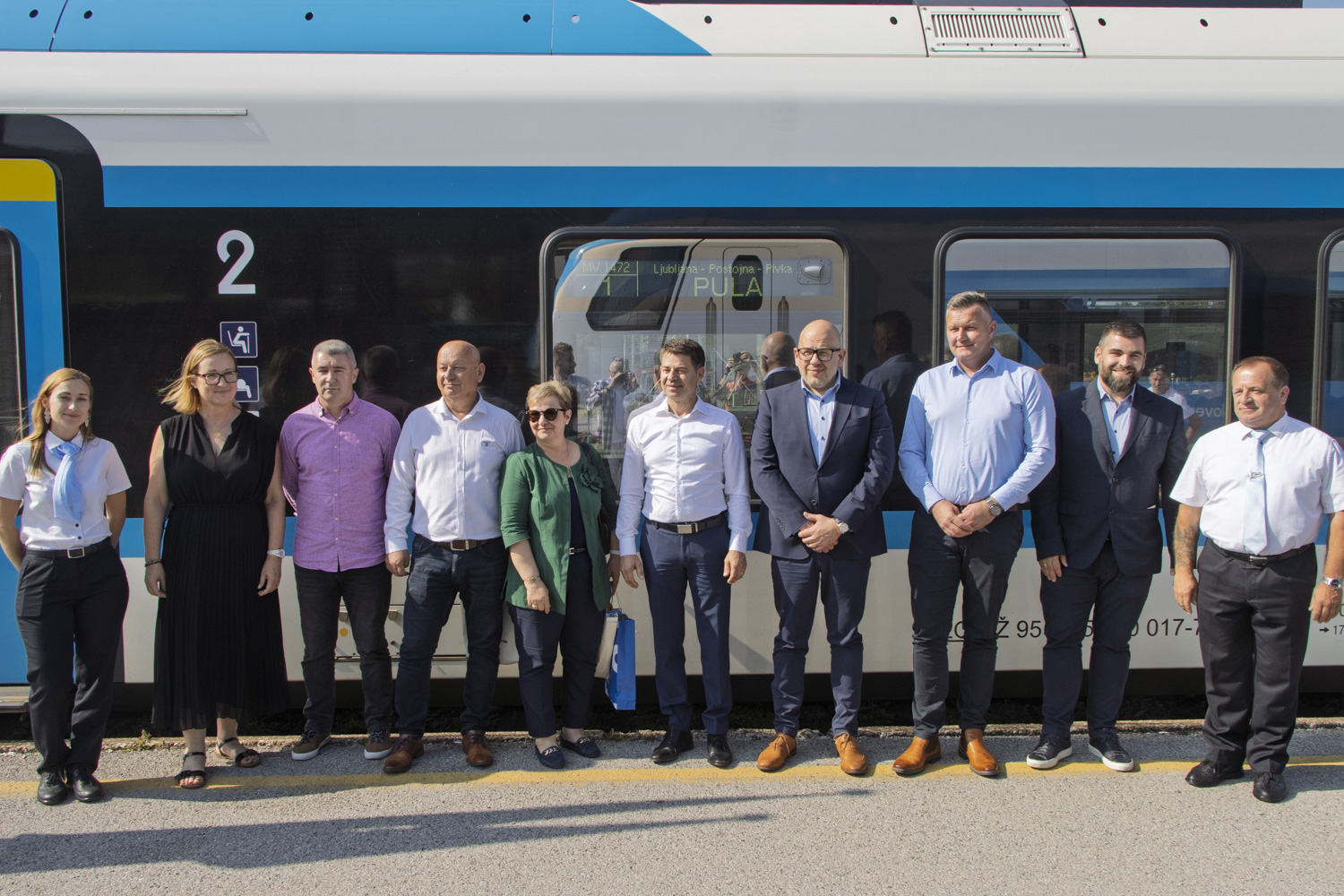
On 20 June, Slovenian Railways (SŽ) launched additional passenger train services between Slovenia and Croatia. For the first time in history, SŽ’s new modern Stadler Flirt trains travelled directly to the centre of Zagreb and from there via Ljubljana to Pula, significantly improving travel options for passengers. The Zagreb–Ljubljana–Pula train represents the first jointly developed and implemented project between Slovenian Railways and Croatian Railways.
Slovenia is now connected with the Croatian capital by as many as twelve daily train services in both directions. This development enhances the offer of safe, modern, and environmentally friendly train journeys. On average, Slovenian Railways consumes almost five times less energy per passenger than is used in road transport.
On Friday, 20 June, the first train connecting Zagreb, Ljubljana and Pula departed from Zagreb’s Main Railway Station. This marks the first direct rail connection between these cities in more than 30 years. The train will operate every Friday from Zagreb to Pula via Ljubljana and return on Sundays from Pula to Ljubljana and Zagreb. In total, it connects 13 towns and cities, including Dobova, Sevnica, Zidani Most, Postojna, Divača, Buzet and others. A one-way ticket between Ljubljana and Pula costs EUR 19.
The inaugural journey from Zagreb to Pula was attended by senior representatives of Slovenian and Croatian Railways. The event was marked by an address from Mr Miha Butara, Director of Passenger Transport at Slovenian Railways (SŽ-PP), at Zagreb Main Station, where he was welcomed by Mr Željko Ukić, President of the Management Board of Croatian Railways Passenger Transport (HŽ-PP), together with city and regional officials.
Mr Miha Butara, Director of Passenger Transport at Slovenian Railways (SŽ-PP), said:
“I am very pleased that we have established excellent cooperation with our Croatian colleagues. The Zagreb–Ljubljana–Pula train is our first jointly developed and realised project. This autumn, we plan to introduce new train services between Ljubljana and Zagreb, connect Đurmanec and Rogatec, and once again seek to reintroduce the Ljubljana–Zagreb–Belgrade route. These new and additional connections open up new opportunities for regional integration, improving mobility for residents and visitors, and promoting sustainable travel. At Slovenian Railways, we remain committed to our goal of establishing new international connections, as we believe these are essential for business, daily, and tourist travel, and for improving the overall quality of life in the region.”
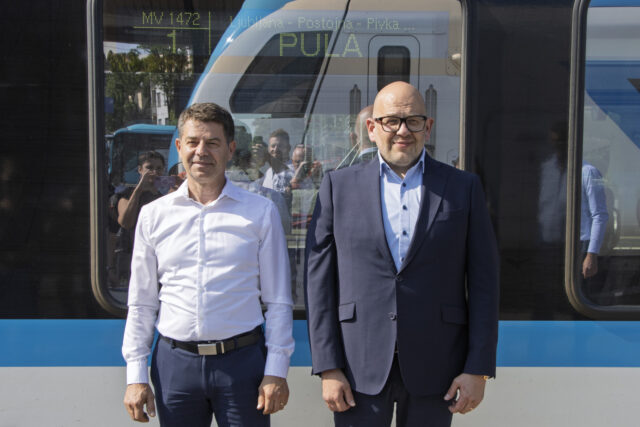
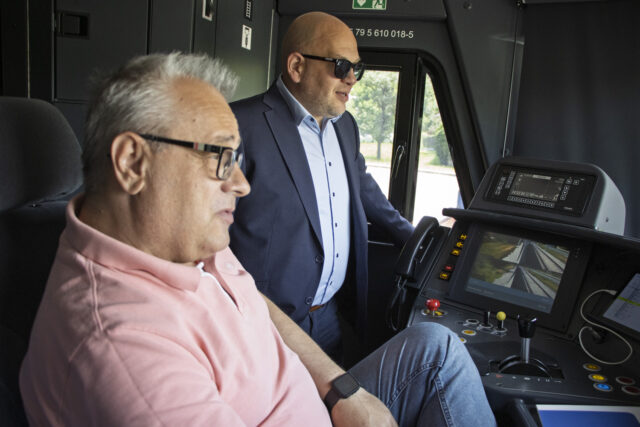
Mr Željko Ukić, President of the Management Board of Croatian Railways Passenger Transport (HŽ-PP), added:
“I am delighted that we have gathered today to mark the first direct train journey from Zagreb via Ljubljana to Pula. It has been more than 30 years since these three cities were last directly connected by rail. I would like to thank our colleagues from Slovenian Railways for their cooperation in establishing this service, for our joint efforts in promoting environmentally friendly transport, and for helping to strengthen the connection between Croatia and Slovenia. I believe this cooperation will lead to further new train services on various routes in the future. Our shared goal is to provide the highest quality mobility for citizens at affordable prices.”
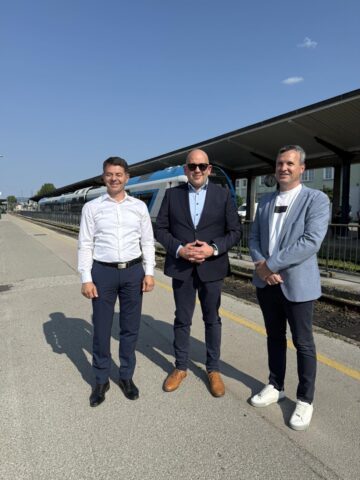
At Ljubljana Railway Station, representatives of Slovenian and Croatian Railways were welcomed by Mr Miran Sečki, Director of the Public Passenger Transport Management Company (DUJPP).
(Pictured from left to right: Željko Ukić, President of the Management Board of Croatian Railways Passenger Transport (HŽ-PP); Miha Butara, Director of Passenger Transport at Slovenian Railways (SŽ-PP); and Miran Sečki, Director of the Public Passenger Transport Management Company (DUJPP).)
The new railway connection between Slovenia and the Istrian region represents an important step towards more accessible, environmentally friendly, and comfortable travel. The train operates every Friday (to Pula) and Sunday (to Zagreb), stopping at key stations that provide easy access between towns, tourist destinations, and cultural and natural attractions.


