Structure of energy consumers
87,0 %
Rolling Stock
1,6 %
Road Vehicles
11,4 %
Facilities
The role of energy consumption and carbon footprint at the company as an important indicator with respect to costs and environmental protection has been growing steadily.
Trains are incredibly energy efficient and environmentally sound, which makes them highly attractive and largely promoted as a sustainable way to travel amidst the efforts to decarbonise transport.
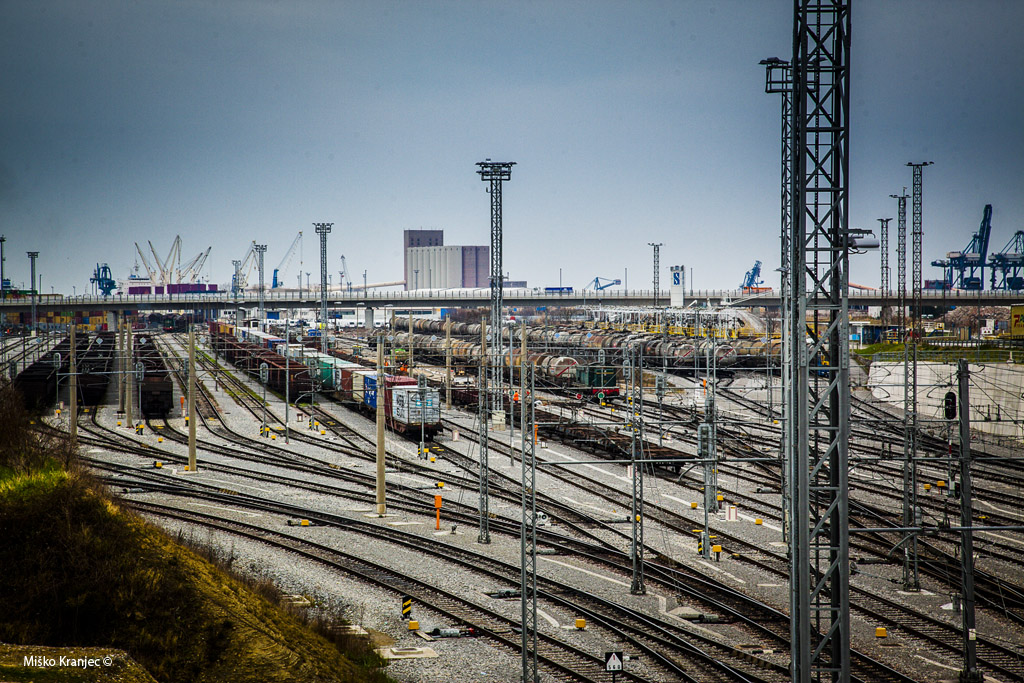
STRUCTURE OF ENERGY CONSUMPTION IN RAL TRANSPORT ON SLOVENIAN RAILWAYS
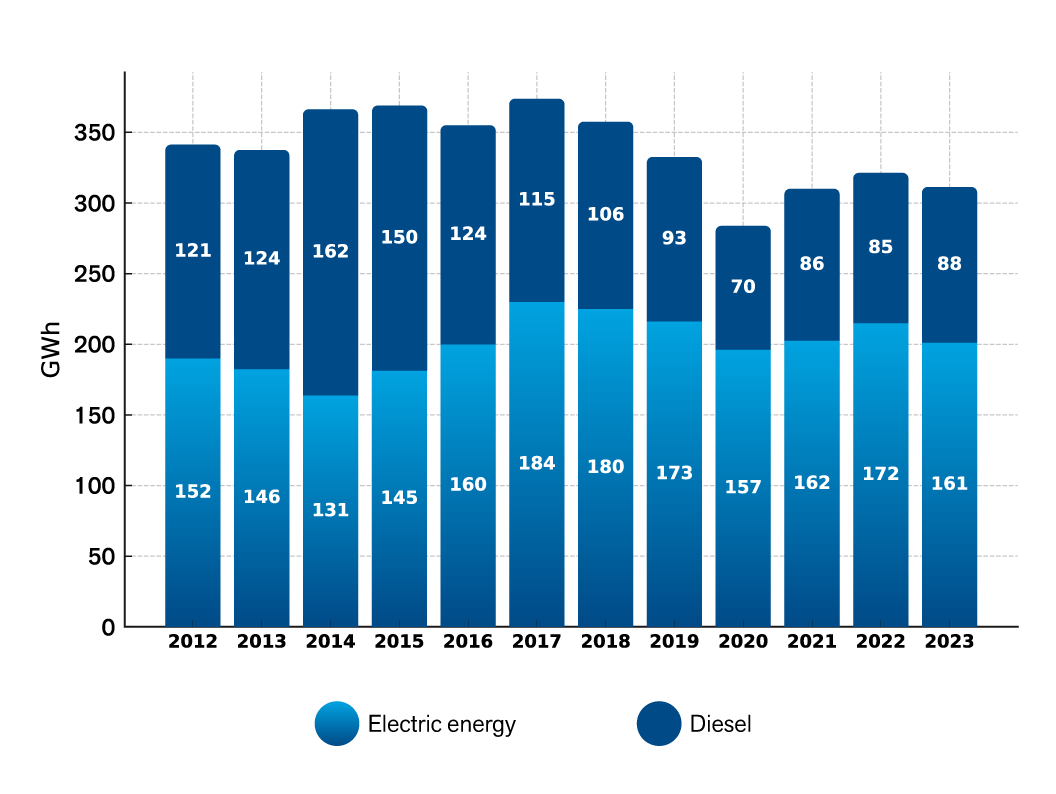
As much as 50 % of electrical energy consumed by Slovenske železnice’s electrified rolling stock is sourced from renewables, which translates to a notably lower carbon footprint of cargo and passengers travelling by rail.
Slovenske železnice’s carbon footprint from rolling stock in 2023
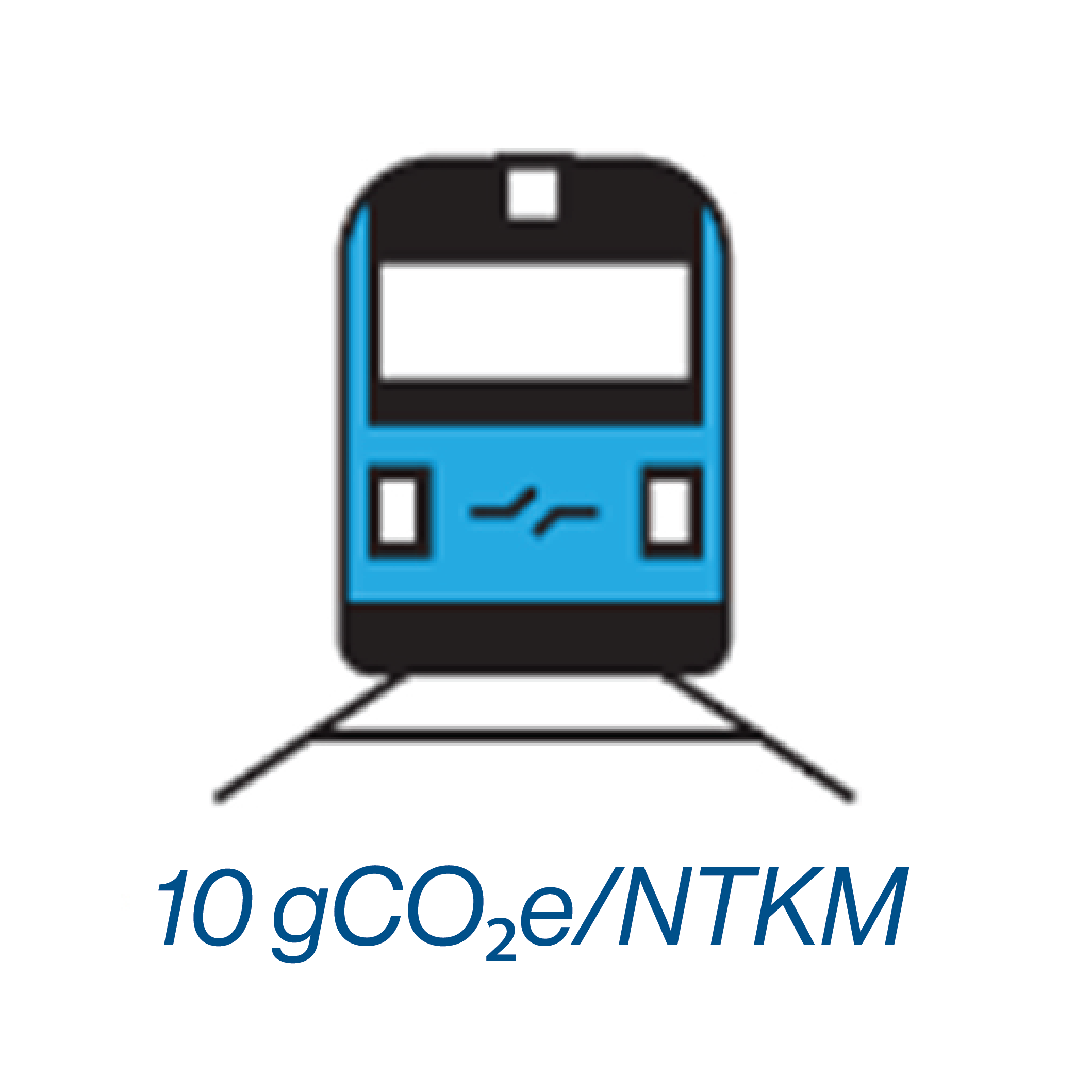
At SŽ – Tovorni promet, d. o. o., per NTKM
At SŽ – Potniški promet, d. o. o., per PKM
Environmental efficiency of rail in comparison with competitive branches of transport
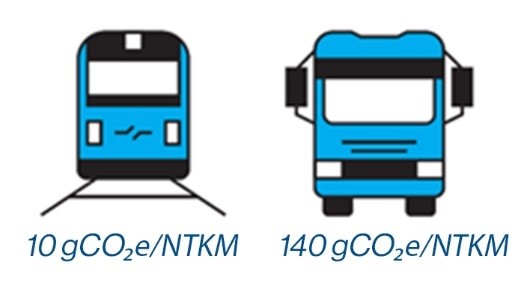
Per NTKM: freight train (calculation by SŽ), truck (EU average)
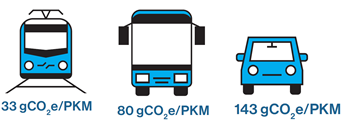
Per PKM: Slovenske železnice passenger train (calculation by SŽ), bus (EU average) and car (EU average) CO2 emissions from rail transport at Slovenske železnice
Rail transport in Slovenia accounts for 1% of all energy consumed in the transport sector
In 2017 transport in Slovenia accounted for 38% of total energy consumption in the country. Within the transport sector, road uses by far the most energy, with rail accounting for as little as 1% of energy consumption.
At present, 77% of all trains run on electricity. One distinct advantage rail has over other transport modes is the high volume of cargo and passengers it is able to move in commercial operations using electrical power.


